Thursday, August 29, 2013

Oklahoma May Expand Tests if Dentist Spread Disease

Oklahoma May Expand Tests if Dentist Spread Disease

Oklahoma health officials are looking at many options after an oral surgeon’s unsanitary conditions.
Medical tests will be considered for W. Scott Harrington’s patients’ spouses and sex partners if the lab results reveal the spread of hepatitis or AIDS.
It’s not common for these infections to be spread through a dental practice. Nevertheless, Tulsa and Oklahoma health departments are recommending blood tests for signs of hepatitis B, hepatitis C and HIV for all of the patients. Around 1,500 had done so as of last Wednesday.
The Tulsa Health Department stated the many spouses and significant others were seeking medical testing.
The Centers for Disease Control and Prevention have recorded just three instances when infectious diseases spread in a dental office.
The Oklahoma Board of Dentistry filed a complaint with 17 counts against Harrington. The board said his clinics in Tulsa and Owasso disregarded basic safety practices mandatory by law.
For more information about the initial story, view last week's Wednesday Watch.
Based on information from the Oklahoma Board of Dentistry, Harrington’s practice included patients with infectious diseases.
Despite the regular appearance of Harrington’s office, his employees used rusty instruments on patients known to have infections, reused drug vials without changing needles and unlicensed assistants sedated patients. Drugs in the office were also outdated and there was uncertified sterilization equipment that was at least 6 years old.
Health officials looked through Harrington’s office after investigating the case for one of his patients. This patient had a hepatitis C infection.
The board wanted to stress how rare this case is and how well the dental profession manages infection control overall.


Wednesday, August 28, 2013

Rainforest Substance May Sooth Toothache

Rainforest Substance May Sooth Toothache

An ancient Incan remedy may have some practical value today.
The rainforest remedy has made it through the first two stages of clinical trials on its way to being utilized to thwart dental pain.
An anthropologist from Cambridge University in the United Kingdom spent time with the Keshwa Lamas people in the Peruvian rainforest. After spending time there, Dr. Francoise Barbira-Freedman pushed for the substance to undergo clinical trials.
The remedy comes from the Acmella Oleracea plant and has fared well thus far. The plant source is transformed into gel form for medical usage and the goal will be to reduce some anesthetic usage in the future.
The treatment has been put through some trials for five years. As of now, there are no side effects that have been identified. The drug is now in the third stage of the trials and could be ready for usage some time in 2014.
Freedman first thought this remedy could be used as early as 1975, when it was first used on her after her wisdom teeth were causing here some pain.
If everything checks out fine, this remedy could be a revolutionary treatment in dentistry. It may limit the number of injections people have to have—or maybe end them entirely. More research on this remedy is necessary to get a full understanding of its impact.

Success Rate of Tooth Implants Rises

Success Rate of Tooth Implants Rises

People with a bone deficiency may be in luck.
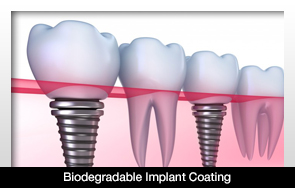
Researchers at the Universitat Jaume I in Castellon, Spain have created an implant coating with biodegradable material. This will serve to increase the success rate of implants. At the same time, the total time of osseointegration will be lowered.
The goal of this new material is to enable some people to go about their normal lives faster than they can now. For some people, the implant could take months to be anchored to the jawbone.
This material works by releasing silicon compounds during degradation, serving to promote bone generation.
Some of the testing included in vitro testing with cell cultures of various biomaterials and, eventually, live animal evaluation. This was done until the desired results were feasible. The next part included clinical evaluation to create sanitary products that can be marketed within a few years.
This research is necessary because not replacing a tooth creates other problems, like altering one’s bite line. Periodontal diseases like gingivitis or periodontitis also may be an issue. As a result, it’s essential to replace the tooth as quickly and effectively as possible.

New Information Reaffirms Fluoride’s Benefits

New Information Reaffirms Fluoride’s Benefits

New research backs up what many already knew: fluoride is beneficial in fighting tooth decay.
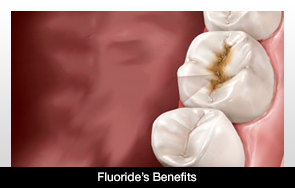
The report shows that fluoride works by making an impact on the adhesion force of bacteria that get caked on teeth and generate cavity-causing acid. The new information was determined after experiments concluded that fluoride lowers the ability of the bacteria to stick to the teeth. The bacteria can be washed away through brushing, saliva or other methods.
The information appears in the journal Langumir.
The controversy regarding fluoride’s positive or negative impact has raged on for years. Still, many previous studies have indicated that fluoride strengthens the enamel coating that protects teeth from acid. Fluoride has also been shown to harden a thin layer of enamel.
More studies on fluoride and its impact on teeth will continue to be conducted.

Tuesday, August 27, 2013

How Effective is Mouthwash?

How Effective is Mouthwash?

Mouthwash may not work as well as many studies claim.
A recent clinical study in the Journal of Clinical Dentistry analyzed this issue. It showed that mouthwash did slightly reduce the risk of gum disease.
To compile the data, 139 participants were divided into two groups. The first group was told to use mouthwash while the other group was given a placebo to gargle with. The results concluded that the group using mouthwash had better oral health than the group that used the placebo.
Research, however, has shown that mouthwash can aid in lowering the risk of oral disease and bad breath but only by a marginal amount. The most important thing regarding oral health is to brush twice each day for at least 2 minutes.
Issues arise when people think they can use mouthwash in lieu of brushing.
For those people who brush on a regular basis and visit the dentist frequently, there may be no tangible oral health benefit for utilizing mouthwash.